 Knowing how to choose a machined parts manufacturer can save you weeks of rework, rejected lots, and awkward conversations with your own customers. On paper, most shops look alike: CNC equipment, a list of materials, a promise of tight tolerances. The differences show up in the quality system, the inspection data, and how the shop handles your print when something isn’t clear.
Here’s a practical checklist from the other side of the quote, written by the team at Reading Advanced Machining (RAM).
Start with the quality system. A certified quality management system shows the shop has documented processes, management review, and corrective action in place. ISO 9001 is the common baseline. If your parts go into aircraft, spacecraft, or defense systems, look for AS9100D. For defense work involving controlled technical data, ITAR registration is essential.
Certifications don’t guarantee a good part, but they tell you the shop’s systems have been audited by someone other than the shop.
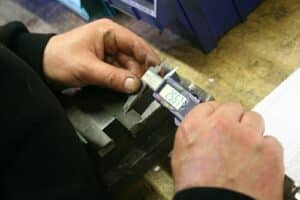
Ask what the shop measures with and how often. Accuracy means hitting the target dimension, while precision means hitting the same dimension consistently. A good supplier delivers both, and meeting precision and accuracy requirements starts with calibrated measurement equipment and a strong quality foundation.
Good questions to ask:
Material experience matters more than many buyers expect, especially with plastics. High-performance plastics like PEEK, Torlon, Vespel, and Ultem can move with heat, absorb moisture, or chip if they’re cut the wrong way. A shop that mostly cuts steel may struggle to hold tolerance on them.
Ask which materials the shop machines regularly, whether it stocks them, and whether it uses stress-relieved material. Ask for material certificates as well, so you know the stock meets your specification.
Make sure the shop’s sweet spot fits your order. Some shops are built for one-off prototypes, others for long production runs. Ask about typical lead times for your quantity, how they handle rush orders, and whether they can carry a part from prototype through production without a change in process.
Traceability protects you if a part is ever questioned. Ask whether the shop can tie each lot back to its material certs and inspection records. If your drawings are sensitive, ask whether it works under NDA and how it controls access to technical data, particularly for defense programs.
Pay attention during quoting. Does the shop ask good questions about your print? Do they flag a tolerance that will drive cost or a feature that’s hard to machine? Clear, timely answers before the order are the best predictor of clear, timely answers after it.
We’d encourage you to put any manufacturer, including us, through this checklist. Here’s how we answer it:
Our CNC manufacturing page lists our machines and inspection equipment in full. If you work in aerospace, defense, or semiconductor, our guide to machined parts for those industries covers what those programs need.
What certifications should a machined parts manufacturer have? ISO 9001 is the common baseline. Aerospace and defense work often requires AS9100D, and defense programs involving controlled technical data require ITAR registration.
What’s the difference between accuracy and precision in machining? Accuracy is how close a part is to the target dimension. Precision is how consistently the shop hits the same dimension across many parts.
Should I ask for material certifications? Yes. Material certs confirm the stock meets your specification and support traceability if a question comes up later.
How many quotes should I get? Two or three is common for a new part. Compare quality systems and communication as well as price and lead time.
Ready to compare? Request a quote or call 610-926-3245, and see how we answer your questions.


